Six Days Out
· Dennis W. Davis
U.S. spot Bitcoin ETFs posted six consecutive days of outflows and $1.42 billion in weekly exits. The year-to-date net inflow figure for 2026 has shrunk to $536 million. What the flow data actually says.
The nine-session inflow streak that defined early May is a distant memory.
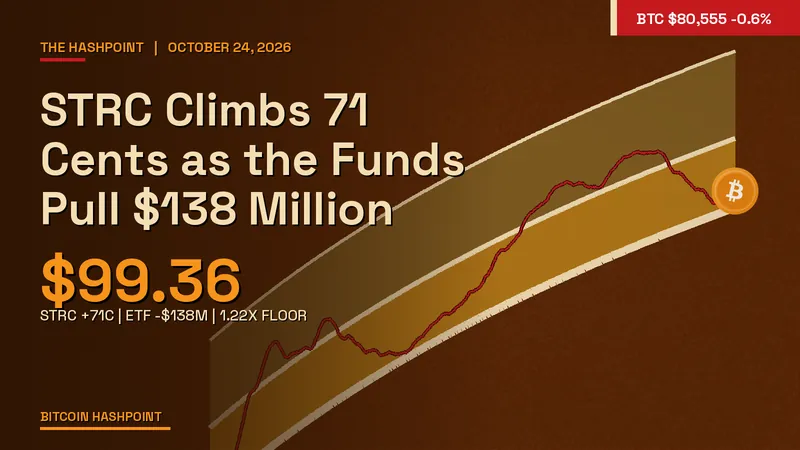
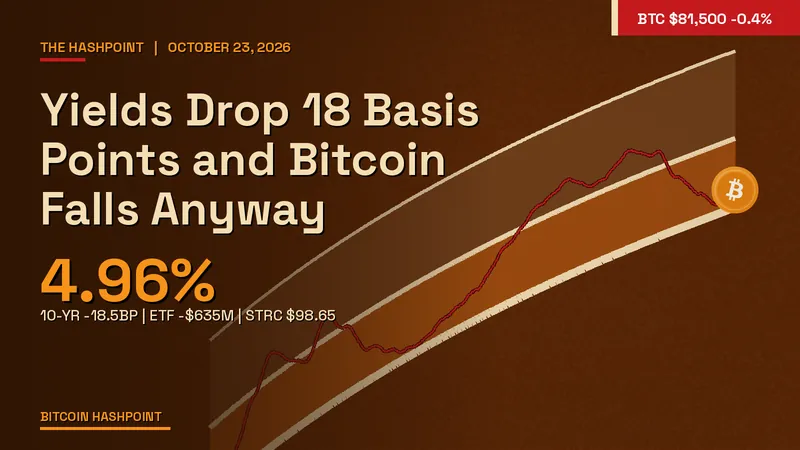
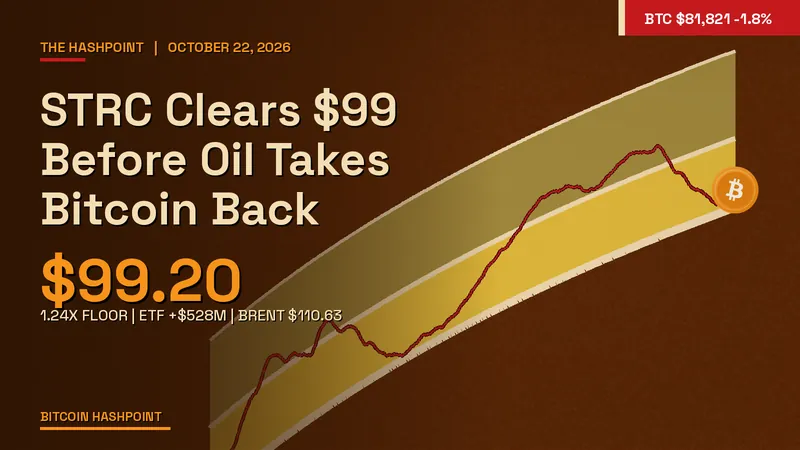
U.S. spot Bitcoin ETFs have now posted six consecutive days of net outflows entering the week of June 1. The week of May 26 produced $1.42 billion in net exits across the category. The May 27-28 window alone saw $897 million in long liquidations alongside the ETF outflows, compressing Bitcoin's price toward the $73,000 level. The year-to-date net inflow figure for all of 2026 has shrunk to $536 million, down sharply from the April high-water mark when cumulative 2026 inflows were tracking well above $2 billion.

The composition of the outflows matters more than the headline number. IBIT and FBTC together accounted for more than 74% of the week's exits. BlackRock's IBIT alone shed $528 million on May 28, the largest single-day outflow from that fund in recent months. Fidelity's FBTC posted $36.3 million in daily outflows. No other U.S.-based Bitcoin ETF recorded a meaningful flow change on the worst day of the week. Nearly all of the institutional pressure came from the two largest funds.
That concentration is the signal. When retail exits a category, the outflows are diffuse. When large institutional allocators reduce exposure, the exits concentrate in the most liquid vehicles. IBIT and FBTC are the most liquid Bitcoin ETFs in the category. The week's flow data suggests that the selling was institutional in character, not retail.
There is additional context worth noting. Jane Street reduced its Bitcoin ETF holdings by approximately 70% in the first quarter of 2026. Goldman Sachs cut its Bitcoin ETF position by 10% over the same period. Those 13F disclosures, which lag the actual portfolio decisions by weeks, are now showing up as context for the flow picture. Large, sophisticated institutional allocators were already reducing exposure before the May outflow wave hit.
Against this backdrop, one structural counterpoint holds. ETF AUM as a percentage of total Bitcoin market capitalization has climbed to 7.16%. The ownership base, measured as a share of the total asset, is larger than it has ever been. Long-term structural holders are accumulating through the noise. The short-term flow picture reflects institutional positioning decisions, not a verdict on Bitcoin's structural role in institutional portfolios.
IBIT's year-to-date net inflow still stands at $2.7 billion, putting it well ahead of all rivals even after the outflow weeks. The category is not in structural retreat. It is in a period of tactical repositioning by large allocators responding to the same macro headwinds that have compressed the price into its current band: elevated yields, geopolitical uncertainty, Bitcoin below $73,000. The category is not broken. The bid is repositioning. Those resolve differently, and on different timelines.
Get the Hashpoint by email twice a week, Wednesday and Saturday: subscribe free, one click to unsubscribe.